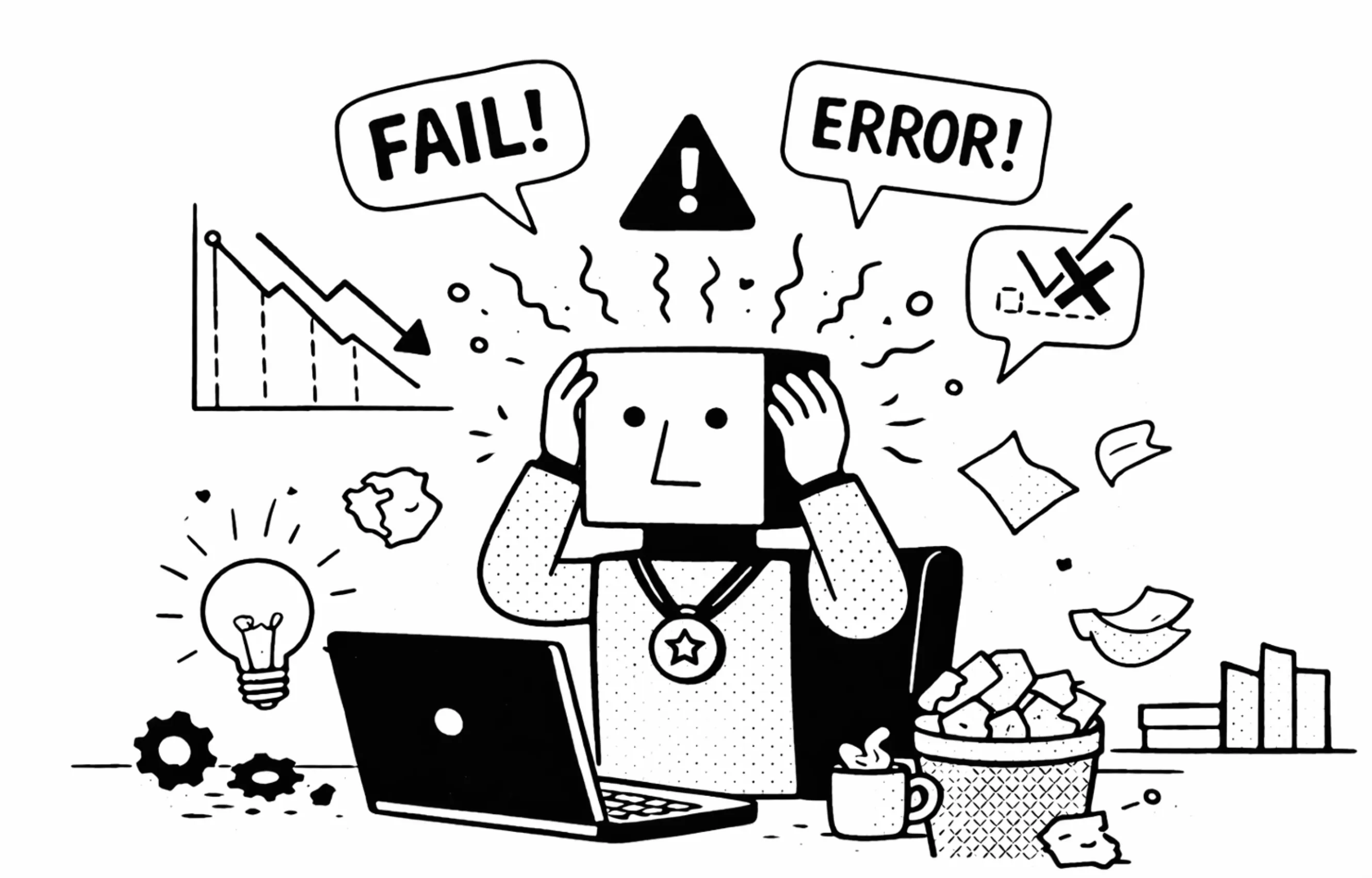
Most AI projects don’t fail because the model was too small, the data was too dirty, or the team wasn’t technical enough. They fail because no one stopped to ask whether the problem was worth solving in the way they were trying to solve it.
The classic mistake: a team decides to “add AI” to something, picks a model, starts fine-tuning, and six months later has a system that works in demos but breaks on real input. The problem wasn’t the execution — it was that the problem was defined backwards. They started with the tool and worked toward the use case, rather than starting with a sharp business outcome and asking whether machine learning was even the right lever.
Good AI problem definition sounds deceptively simple: what decision does this system need to make, how often, with what inputs, and what happens if it’s wrong? Get that wrong and you’ll build something impressively useless. Get it right and suddenly the “AI problem” often turns out to be a data pipeline problem, or an interface problem, or sometimes just an Excel formula. That clarity is the work — and most teams skip it.
The projects that ship are the ones where someone in the room kept asking uncomfortable questions early: What’s the failure mode? Who owns the output? What’s the baseline we’re beating? Those questions feel slow at the start. They’re the reason the thing actually works at the end.